
In the late '60s, muscle cars battled fiercely, pushing speed and design limits. Amid this competition, the Plymouth Superbird emerged as a symbol of daring engineering and racing excellence. Its tale is one of ambition, victory, and relentless pursuit of track supremacy.
Historical Context and Development
The late '60s saw horsepower and ambition collide like a spaghetti western showdown. Ford galloped ahead, leaving Chrysler in the dust. Richard Petty, Plymouth's legendary racer, abandoned his mopar stable for Ford's alluring machine. Chrysler responded with the Dodge Charger Daytona, an aerodynamic marvel slicing air with its needle nose and barn-sized rear spoiler, engineered to rule the track.
Picture a development lab reeking of burnt rubber and clinking wrenches, where experts analyzed the Charger Daytona's victories. The Plymouth Superbird emerged from this mix of necessity and ingenuity in 1970, aiming to lure Petty back from Ford. With a towering wing and elongated nose cone, it was a sight to behold.
Building a racecar wasn't just about speed; it was a chess game dictated by NASCAR's homologation rules. The bigwigs declared: "No race unless you build a road version." Thus, 1,920 Superbirds were produced for dealerships, letting every gearhead fantasize about channeling their inner Richard Petty.
Under the hood, the Superbird roared with options like the 440 Six-pack and the apex predator, the 426 Hemi V8. It wasn't for leisurely Sunday drives but for blazing through asphalt. Hemi monsters could hit 0 to 60 in 4.8 seconds—impressive enough to make grown men weep and mopars squeal. The Superbird wasn't just flexing; it was setting records, reaching 200 mph at Talladega.
Despite its triumph, the Superbird's flame flickered quickly. NASCAR's changing regulations clipped "aero cars" wings by 1971. New rules made these mechanical marvels obsolete in official circuits, banning their greatest strength—aerodynamics—to level the playing field.
Ironically, the radical design that smashed records became its downfall in showrooms. Buyers balked at its outrageous appearance, leaving dealers bewildered and Superbirds stranded on lots. Time transformed perception; today, the Superbird is a crown jewel among muscle cars. Its legacy endures, partly due to rarity and largely due to its audacious leap into racing immortality.
A Plymouth Superbird still commands jaw-dropping prices at auctions—often in the million-dollar range for pristine Hemi beauties. Whether Richard Petty touched a particular Superbird adds another layer of intrigue and value to these relics.
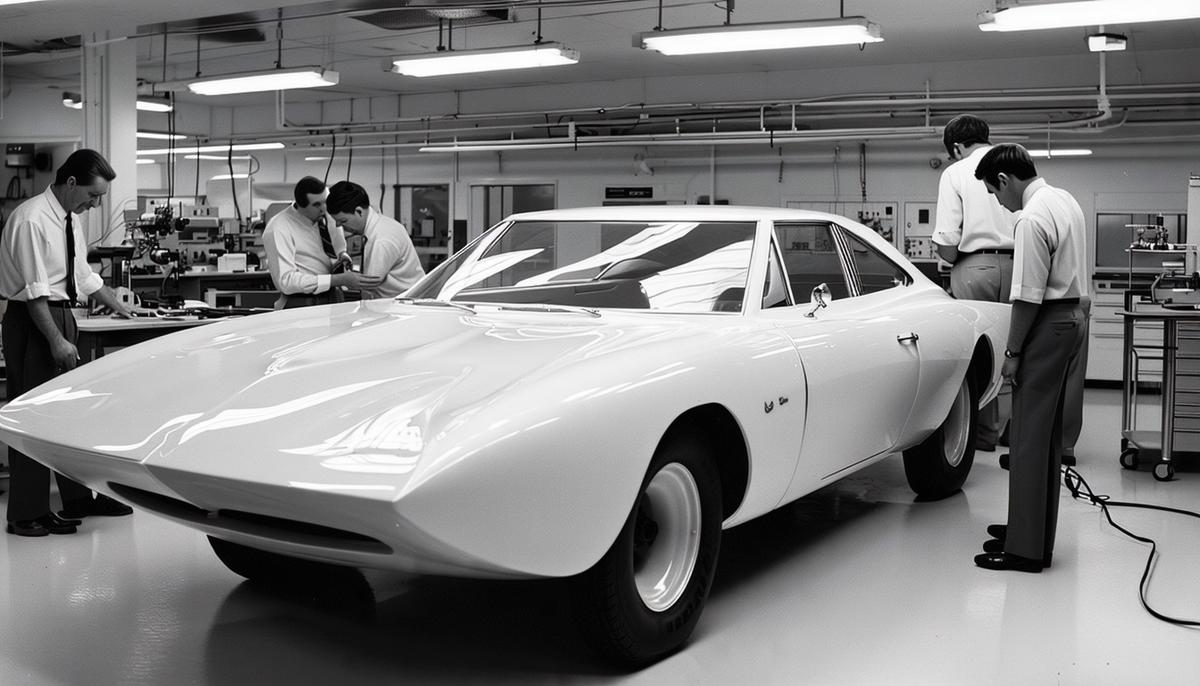
Design and Engineering Innovations
The Plymouth Superbird wasn't just any car—it was a speed demon with a wind-tunnel obsession. Those curves, the sultry stretch of that snout, and that rear wing you could rent out as a billboard—it all added up to a vehicle so radical that its design seemed to shout, "Catch me if you can!" Behind the flair were serious engineering breakthroughs crafted to crush the competition on both the racetrack and the showroom floor.
Aerodynamic Masterstroke
- Nose cone: Sculpted to slash through air resistance, slicing off drag-filled air pockets
- Retractable headlights: Added to avoid even whispering to the wind between sprints
- Titanic tail wing: Provided crucial downforce, keeping the car glued to the track at high speeds
These aerodynamic wonders had unique challenges. Manufacturing these winged beasts wasn't just about turning sketches into metal. Designers had to solve the trunk clearance issue, hence the "sky-high" wing placement. While this decision raised eyebrows, it effectively merged functionality with show-stopping aesthetics.
Under the hood, the Superbird came stocked with the mean machines of their time:
- 440 Super Commando V8s
- Legendary 426 Hemi V8, lauded in hushed tones in garages everywhere
Mate it with a choice between the tire-spinningly satisfying 4-speed manual or the smooth Torqueflite 727 transmission, and you've got a powerhouse ready to conquer any track.
These engineering marvels weren't without quirks, though. Such prowess meant precision was needed to keep it all humming: overheating issues and fuel consumption were more than just footnotes. The long nose and aggressive aero features didn't even really kick in until you hit over 70 mph, where the aerodynamic cling hugged asphalt like it was proposing marriage.
True, the "showroom appeal" didn't quite match the Superbird's racing prowess, and its peculiar aesthetics left some potential buyers puzzled. But for those who saw its racing destiny, it was an engineering feat that mocked gravity, defied tradition, and etched its name in high-octane history.

NASCAR Performance and Legacy
In NASCAR, the Plymouth Superbird wasn't just a car; it was the stuff of legends, blasting through the track like a comet on a Saturday night sky. Born to dominate, the Superbird was equipped to tantalize NASCAR and send shivers down the track's spine. With powerhouse engines like the 426 Hemi purring under its elongated hood, this car wasn't just racing; it was redefining speed.
In its glorious 1970 run, the Superbird was a force of nature, a winged menace that propelled Richard Petty—'The King' himself—back into Plymouth's racing saddle. There was no denying its command; eight NASCAR victories under its belt and a presence that screamed "unstoppable." It wasn't just a car punching the clock and collecting laps; it was a headline act, a showstopper that made other racers look like they were back in driver's ed.
But alas, the Superbird's meteoric rise was met with an equally swift descent. NASCAR officials, clearly unimpressed with Chrysler's sky-high aspirations, decided it was time for a reality check. Citing safety concerns and the alarming gap in performance norms, aero cars were effectively stymied by new regulations. The 1971 season heralded a call for downsized engines, setting a cubic inch cap that might as well have been a cross on the Superbird's blueprints.
Yet, the Superbird left a legacy that stretches beyond its short-lived career. Its foray into aggressive aerodynamic design was nothing short of revolutionary, dictating a shift in how future racing machines would be dreamt up and crafted. Car manufacturers took note, learning that cutting-edge aerodynamic prowess could turn the tide in high-speed competitions.
"The Superbird became more than a blip in NASCAR history. It morphed into a mythic symbol, a testament to the audacity of design and the allure of speed."
Its brief but fiery tenure ensured that racing teams and manufacturers would forever endeavor to blend over-the-top designs with scientific precision, always pushing the limits of what's possible on the track. The legacy of the Plymouth Superbird breathes in every streamlined silhouette that whips down the straightaway, a whisper from a bygone era urging anyone who'll listen: "Be bold, go fast, and never look back."
Market Reception and Collectibility
The Plymouth Superbird was like a high school superstar – dazzling on the track but causing a ruckus in the showroom. Its radical design left potential buyers cross-eyed in confusion rather than jaw-dropped in awe. The very elements that made it a track marvel at 200 mph were lost on customers driving in a 25 mph school zone.
Dealerships saw these mechanical marvels sit rusting on lots, more museum curiosity than cash cow. Despite being wrapped in race-winning allure, selling the Superbird turned out to be a tough gig. Unsold Superbirds collected dust, and dealers chucked them out at deep discounts just to make room for reliable sellers.
Then, like a movie plot twist decades in the making, the Superbird's story morphed from showroom failure to Holy Grail status. Collectors worldwide began to see not a bizarre oddity, but a piece of history—a testament to audacious innovation and rebellious engineering.
Today's auction blocks erupt in furious bidding wars over these once-disregarded gems. One 1970 Hemi Superbird recently fetched $1.5 million at a Barrett-Jackson auction, proving that scarcity, performance pedigree, and pop culture mystique had turned one man's ordinary purchase into another's extraordinary prize.
Factors Contributing to Superbird's Desirability:
- Rarity: Only 1,935 units originally produced
- Performance pedigree: 426 Hemi engine in select models
- Racing history: Associated with Richard Petty's return to Plymouth
- Unique design: Radical aerodynamics that stand out even today
- Cultural significance: Represents the peak of the muscle car era
For the collector, owning a Superbird signifies something beyond financial investment—it's cherishing a sliver of that glorious muscle car epoch, a reminder of when audacious design boldly declared to the world: "Why just drive when you can soar?"
Cultural Impact and Personal Stories
The Plymouth Superbird wasn't just making noise on the NASCAR front—it also soared into the cultural zeitgeist. Its screaming colors, swooping curves, and sky-puncturing wing made it a visual darling across pop culture landscapes. From cartoons to die-cast models, the Superbird was the muscle car equivalent of a rockstar.
Richard Petty, "The King," shared the steering wheel with this legendary machine. When Petty chose to rejoin Plymouth, lured back by the Superbird's groundbreaking design, it wasn't just a racing decision; it was a statement. Petty's Superbird, brandishing his signature blue, became emblematic of his dominance and determination.
The Superbird crossed generations, from those who witnessed its original rise to younger fans eager to learn its legacy. In the animated film "Cars," a Petty-like character adorably echoed the history and personality of the racing icon, introducing new generations to the gravity-defying allure of the Superbird.
"For the owner who insists on owning a production performance car so distinctive that he would rarely see another on the highway, the '70 Plymouth Superbird and the nearly identical Dodge Daytona Chargers were among the best choices." – Road Test Magazine, 1970
Owners of these winged warriors nurtured profound connections with their machines. Consider tales of owners whose cars were gifts from a parent, like one lucky woman who treasured her father's $9,000 investment made in the '80s. Though now valued at several times that amount, such Superbirds often remain in family hands, prized not for their auction value, but for the stories they carry.
At car shows, lineups of Superbirds spark conversations like wildfires. Enthusiasts debate mods, maintenance of that iconic wing, or the finer points of model year features. For them, it's not just owning a piece of history; it's keeping the folklore burning bright.
The Superbird's impact is far greater than the sum of its parts. It's an artifact of a distinct American era, a testament to bold design philosophies, and a vessel of personal and cultural nostalgia. It's the symbol of those lofty dreams we once had, each mile driven a story of wild ambitions and nostalgic memories.
The Plymouth Superbird remains a testament to an era when cars were more than just vehicles; they were icons of daring creativity and speed. Its legacy endures, reminding us of a time when racing dreams took flight and left an indelible mark on automotive history.