
Origins and Evolution
The Plymouth Fury burst onto the scene in 1956 as a flashy, high-performance edition of the Belvedere. It was Plymouth's way of flexing its engineering muscles, with gleaming trim and enough kick under the hood to leave the competition in its dust.
By 1959, the Fury had grown up, becoming its own standalone model. It rode the waves of sixties and seventies style, sometimes wowing and sometimes confounding. The 1958 model even got its 15 minutes of fame as the star of Stephen King's "Christine."
As the sixties rolled on, the Fury shifted gears from speed demon to family cruiser. It kept evolving, adding models like the Sport Fury and Fury III to cater to different tastes. In the late sixties and seventies, it grew bigger and more luxurious, joining the trend toward larger, comfier rides.
The Fury stuck around until 1978, when Plymouth decided it was time for new ideas. But even today, you'll find Fury enthusiasts breathing new life into these classics at vintage auto shows, celebrating a time when cars weren't just transport, but a full-throttle statement.
Design and Engineering
The Plymouth Fury's design journey is like flipping through a high-octane photo album of American automotive history. It started life as Virgil Exner's "Forward Look" dream, all sharp lines and fins that could slice through air like a hot knife through butter.
When the sixties groove kicked in, Elwood Engel took the wheel. He steered the Fury towards a classier, sleeker look that still kept enough pizazz to turn heads. By the mid-sixties, the Fury had gracefully shifted into the mid-sized family market, offering plush interiors without completely ditching its performance roots.
Under the hood, the Fury was always packing heat. Chrysler's "TorqueFlite" automatic transmission and torsion-bar suspensions made sure this beast hugged the road tighter than a NASCAR driver takes a turn. Engine options ranged from the reliable Slant Six to the monstrous Commando 426, a powerhouse that practically screamed, "Race me if you dare!"
As the seventies rolled in, the Fury bulked up along with the rest of America's cars. But even as it grew, it held onto its soul – a perfect blend of classic design and modern engineering that made it more than just a way to get from A to B. It was a legend on wheels, always ready to lap the competition.
Performance and Variants
Let's talk about the heart and soul of the Plymouth Fury – its performance. The Sport Fury was the star of the show, packing a punch that could knock your socks off. It wasn't just about getting somewhere; it was about getting there fast and looking good doing it.
Under the hood, the Fury lineup was a smorgasbord of power. The Commando 426 was the big daddy, with 365 horses chomping at the bit. It was the kind of engine that demanded respect on the street and the strip. For those who wanted a slightly tamer ride, there was the Commando 383 – still enough oomph to leave your neighbors in awe.
The Fury III brought a touch of class to the party, blending performance with elegance. It was for the driver who wanted to make an impression without leaving tire marks on every street corner.
During the muscle car era, the Fury wasn't just along for the ride – it was helping to define it. Models like the Sport Fury and Fury III carved out a legacy that still gets gearheads revved up today. They embodied a time when raw power wasn't just an option – it was an expectation.
So here's to the Plymouth Fury – a car that didn't just capture the spirit of speed and strength, it bottled it up and served it with a side of style. It's no wonder these beasts still turn heads and quicken pulses whenever one roars by.
Market Position and Competition
In the cutthroat world of 1960s American cars, the Plymouth Fury was the scrappy underdog taking on the big dogs – Ford's Galaxie and Chevy's Impala. These heavyweights had decades of brand loyalty in their corner, and the Fury had to fight tooth and nail for every sale.
Let's talk numbers. In 1965, Fury sales shot up by about 20%, but the Chevy Impala was still outselling it four-to-one. Ford wasn't far behind either. The Fury was punching above its weight class, but it was a tough battle.
The real struggle wasn't just in sales figures; it was in the minds of buyers. Ford and Chevy had a death grip on what Americans thought of as quality and durability. The Fury, despite its best efforts, was often seen as the middle-of-the-road option when it came to resale value and perceived quality.
Chrysler tried to change minds with warranties and engineering tricks like unibody construction and torsion-bar suspensions. But for many buyers, the Fury was still the underdog – a diamond in the rough that needed a bit more polishing.
Yet, let's give credit where it's due. The Fury bravely challenged the giants, proving that Chrysler's spirit of innovation wasn't easy to quell. It may not have won the sales war, but it earned its place in the pantheon of classic American muscle. For those in the know, the Fury wasn't just a car – it was a statement on wheels, ready to roar past anyone who dared underestimate it.
Cultural Impact and Legacy
The Plymouth Fury blazed its way into legend status, crossing the boundary between metal and myth. This isn't just a car; it's a cinematic icon, a pop culture staple, and a sweetheart among classic car enthusiasts who eat, sleep, and dream in V8 rhythms.
The Fury's cultural impact roared through Stephen King's imagination in the cult classic "Christine." The 1958 Plymouth Fury, possessed by some sinister force, wreaked havoc and claimed its place as an unforgettable automobile. The story transformed the Fury from mere wheels and bolts into a character all its own—an icon of power, persistence, and a touch of menace.
This portrayal embedded the Fury into pop culture history as the car with a personality, arguably even more charismatic than some of its on-screen human counterparts. In "Christine," the Fury is not just an accessory or a backdrop but a full-fledged diva—commanding, mysterious, and endlessly captivating.
Among classic car enthusiasts and collectors, the Plymouth Fury is revered for its timeless design and indomitable spirit. Owning a Fury is like holding a piece of that golden era of automobiles in your garage—an era where style met substance on the highways.
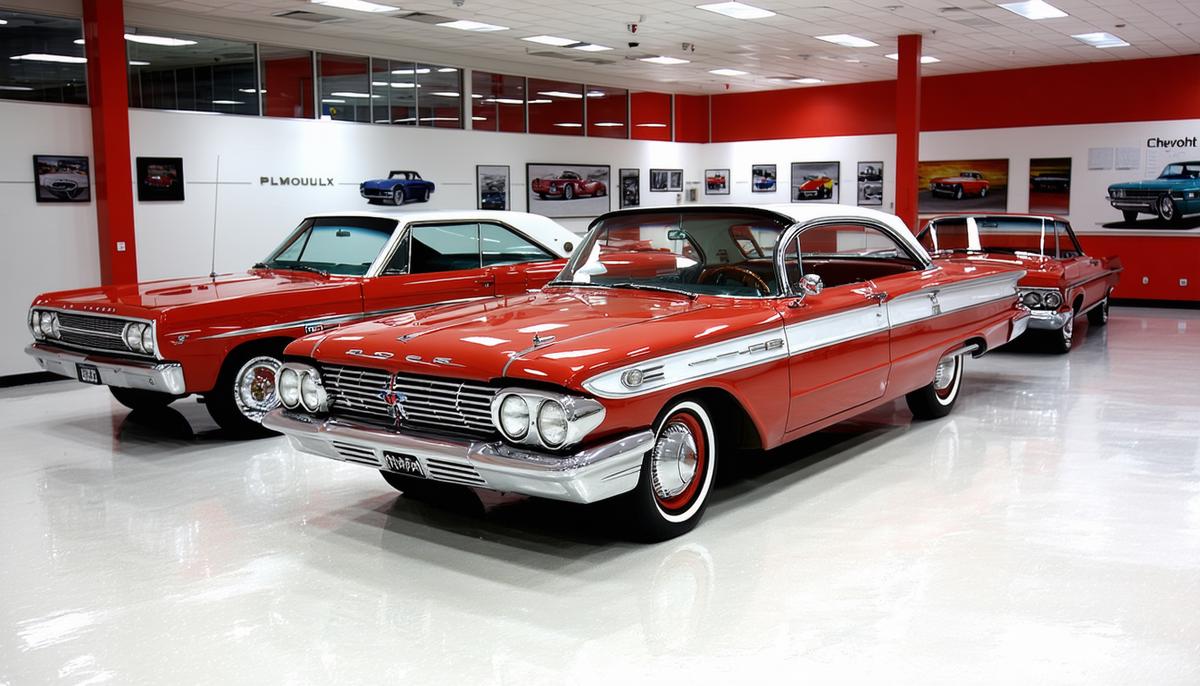
At vintage auto shows, you'd find a Fury standing proud, a testament to its enduring appeal. Enthusiasts lovingly restore these beasts with obsessive passion, eyes lighting up with every bump, chrome line, and engine roar that harkens back to simpler times. It's not just about the show-stopping aesthetics; it's about owning a vehicle of historical and cultural significance.
This legacy transcends generations—new waves of car enthusiasts continue to pour sweat and cash into these classic restorations, ensuring that the roaring sounds of the Fury are heard and admired at car meets and rallies worldwide. This isn't just a hobby; it's a celebration of a car that has outlived its production years to become a cherished artifact from a bygone era of American automotive ingenuity and flair.
If you've ever dreamed of a vehicle with both a story to tell and a history worth preserving, the Plymouth Fury stands as a motorized monument to those who love cars with their emotions as much as their wallets. It's a legacy celebrated by gearheads everywhere, and one that will undoubtedly continue to burn rubber across hearts for many moons to come.

As the Plymouth Fury continues to roar through automotive history, it stands as a testament to an era where cars were more than just machines—they were statements of style and power. The Fury's legacy, fueled by its cultural impact and timeless design, remains a beacon for enthusiasts who cherish the blend of performance and character. Long live the Fury, a true icon of the open road.