
Origins and Evolution
Picture the mid-1950s, an era of curvy cars as jazzy as a saxophone solo. Ford unveiled the Thunderbird in 1955 to challenge the Chevrolet Corvette. They envisioned something glamorous, a celebrity for suburban streets.
The original Thunderbird debuted with a 4.8L V8 engine, churning out 193 horsepower—impressive back then. Unique features like pop-up headlights and a luxurious interior put the T-bird in a class of its own. It wasn't just transportation; it was a statement.
In 1958, Robert McNamara examined market research and decided the T-bird needed family appeal. They added seats, swapped bucket for bench style, and sales soared. It nabbed Motor Trend's 'Car of the Year' and flexed in NASCAR against the Oldsmobile Super 88.
By 1964, Ford had to reimagine the T-bird's appeal. New competitors emerged:
- Ford Mustang
- Pontiac GTO
- Chevrolet Chevelle
These were quicker and fiercer with their muscle car mojo. The T-bird knew it had to maintain its unique class.
The 1967 Thunderbird donned a metaphorical tuxedo. New designs introduced hidden headlights and extra space. It began resembling a mobile lounge more than a race-proven stallion. Meanwhile, Mercury Cougar tried to steal some thunder, looking dapper yet youthful.
As the 1980s rolled in, the Thunderbird had undergone many style shifts. 1983 brought the Thunderbird Turbo Coupe with a turbocharged four-cylinder engine and European flair. Constant upgrades made it a showroom favorite.
But not all stories end happily. The 2002 Thunderbird, a nostalgia-driven revival, left many fans wanting. Its retro look pleased some but puzzled others, and soon, its wheels spun—but not productively.
Despite everything, the Thunderbird's legacy races on. From classy convertible roots to modern flashes, each twist in its history cements it as a true American classic.
Performance and Engineering
Examining the Thunderbird's muscle and brains under the hood is like stepping into a time machine for a wild ride of speed and power. Early Thunderbirds roared onto the scene with big-block V8 engines—these weren't just mechanical souls, they were gasoline-fueled rock stars. The 1956 T-bird packed 193 horsepower, enough to make Sunday cruisers gawk at stop signs.
Jump to the 1980s, and Ford decided to give the Thunderbird new racing shoes. Enter the Turbo Coupe—a turbocharged powerhouse bringing European flair to America's backyard. By 1987, its 2.3L turbo four-cylinder cranked out 190 horsepower and 240 lb-ft of torque, like the cool cousin back from abroad—dashing, exotic, and sophisticated.
Let's talk handling—what separates drift kings from slowpokes. Ford's engineers weren't just tweaking horsepower, they were crafting an experience. The Thunderbird's suspension evolved from a comfortable highway cruiser to a nimble beast ready for corners. The Turbo Coupe's Programmed Ride Control let drivers feel like conductors, adjusting damping rates at will.
As years passed and the '03 model arrived, the T-bird took surprising turns. Variable valve timing bumped power to 280 horsepower, keeping that classic V8 rumble alive. Yet, with its cozy cruiser persona, this Thunderbird favored comfort over raw speed.
The Thunderbird's technical prowess blended performance with pizzazz. Its legacy wasn't about mimicking European rides or cramming in turbocharged wonders. It was about balance, where raw power met luxury, and innovation wove into tradition. It left an indelible mark—a soaring reminder of when engine roars became symphonies of the open road.

Cultural Impact and Legacy
The Thunderbird didn't just leave skid marks on streets; it blazed across American car culture. Think back to the '50s and '60s when every garage had an oil stain and teens plastered car posters next to Elvis shrines. The Thunderbird was dream material, not just for its muscle but for its luxurious freedom aura.
Hollywood knew it too. The Thunderbird flaunted like a diva in films, starring in classics like American Graffiti and transforming into a sky-blue muse in Thelma and Louise. No one could forget the T-bird's head-turning allure as it raced along open roads—a visual metaphor for unrestrained freedom and rebellion.
Yet, the Thunderbird wasn't just a celluloid celebrity; it ruled suburban avenues and high school parking lots. Fans recognized its unique blend of sporty elegance and personal luxury, turning the car into a status symbol for those who idolized James Dean's cool and Marilyn Monroe's glamour.
"The Thunderbird is an icon of American automotive engineering."1
In showrooms, the Thunderbird stood out, creating its own niche—the personal luxury car, where ownership signaled success. It thrived on rivalries, dancing with the Corvette and spawning a new market segment valuing luxury as much as performance. When those flippered headlights popped open, it was like watching magic, mesmerizing buyers with desires only a Thunderbird could fulfill.
As discos and bell-bottoms faded into memory, the Thunderbird clung to its legacy for collectors. Today, it remains a sacred relic of a golden age, where chrome and horsehair were American innovation's grandeur. Collectors still hunt early models, keeping the T-bird's influence alive by restoring their former glory—a challenging but worthwhile task each time that engine roars to life.
The Thunderbird isn't just a nostalgic whisper; it's a roaring testament to American automotive history. It's about glamorous road trips, top-down fever dreams, and a cultural imprint as thick as rubber on hot asphalt. It's a classic reflecting more than metal and paint but embodying a nation's unbridled spirit forever chasing horizons with wind-swept hair and dreams on wheels.

Challenges and Decline
The Thunderbird's tale wasn't always triumphant; it was a rollercoaster of strategic blunders, shifting markets, and unfortunate design detours. As the muscle car era took off, new contenders entered the autobahn. The mighty Ford Mustang, radical Pontiac GTO, and snarling Chevrolet Chevelle overshadowed the charismatic Thunderbird. These muscle cars were leaner, meaner, and packed a punch that made them legends among adrenaline junkies. America's auto fanatics craved raw, rowdy power. The Thunderbird, caught between performance and luxury, found its elegant allure slowly becoming a burden.
The late 1960s and 1970s were Thunderbird's turbulent times, awkwardly balancing between boulevard cruiser and powerhouse. It was like trying to salsa in ski boots—you're moving, but not quite with the rhythm. And just as it found its groove with the Turbo Coupe in the '80s, consumer tastes shifted again. Buyers now wanted efficiency and sleekness found in imports, leaving gas-guzzlers floundering amid rising fuel prices and growing foreign influence.
The '80s and '90s design choices didn't always help. Sometimes the Thunderbird looked too similar to its corporate cousin—the Mercury Cougar. This doppelgänger situation did no one any favors, especially when trying to stand out in the expanding vehicle market.
The 2002 nostalgia-filled revival set the stage for a comeback, but instead of rocketing into the 21st century, it crawled back to the 1950s, turning classic cool into murky water. The latest T-bird had character, like a stylish fedora at a backpack party, but it was more indulgence than innovation. Sales stumbled, and the joyride soon sputtered out.
In 2005, Ford bid farewell to its legendary bird, offering more fanfare than substance to remaining loyalists clinging to those sacred keys. Yet, that's not entirely a eulogy—Thunderbird remains a firebird in its timeless niche, cemented in automotive lore. Enthusiasts keep the spark alive, revering its tales of grandeur and heart-pounding prowess.
While the Thunderbird's nameplate may have vanished from Ford's catalog, its shadow coasts down memory lane—showing what happens when dreams soar high, but market winds change. It serves as a nostalgic lesson: in the race to embrace the future, sometimes you must leave an icon behind, remembered fondly and loudly like echoes of a time when cars were more than transportation—they were legends.
Notable Models and Variants
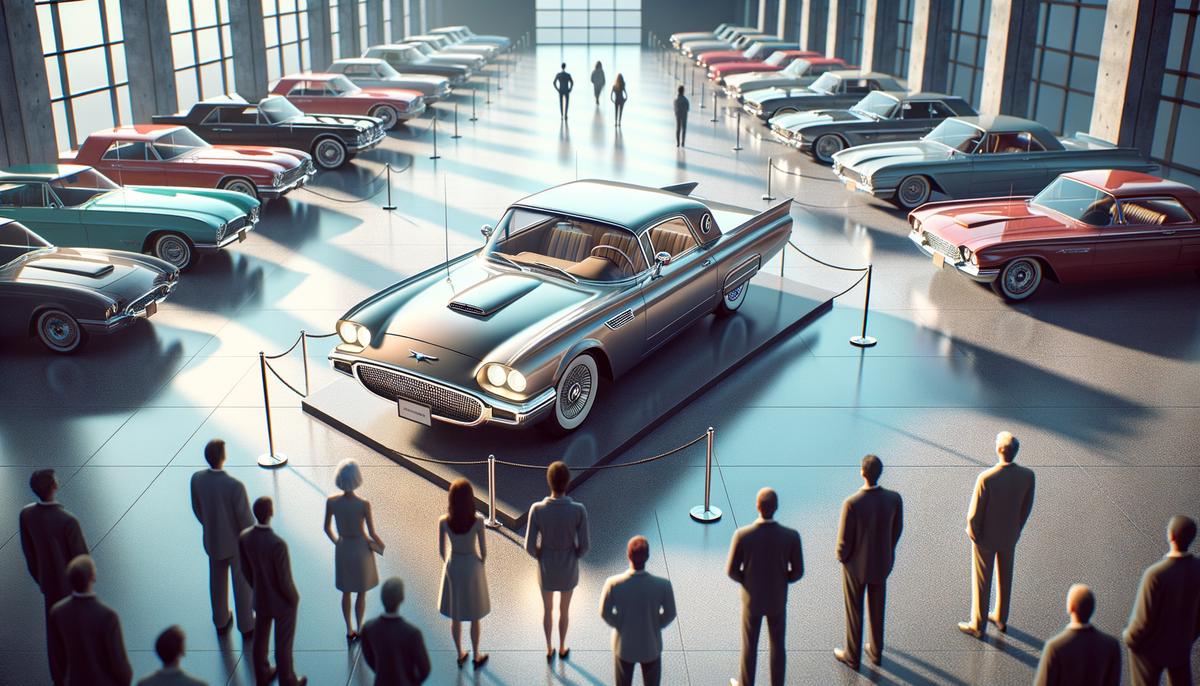
Hey, T-bird fans, let's cruise through the glorious fleet of these sleek beasts! Over the decades, the Thunderbird graced us with models that weren't just cars—they were flashes of style and speed, snapshots of the era, and symbols of the Ford dynasty.
First up, the showstopping 1956 Ford Thunderbird, an icon of American cool with a glamorous 1950s vibe. Rocking the world with its timeless silhouette and that unforgettable porthole hardtop, this beauty had a lion's heart under its hood—a V8 engine with 285 ponies ready to tear up highways. This 1956 gem wasn't just built for roads; it was sculpted for the silver screen, stealing the spotlight in classics like American Graffiti.
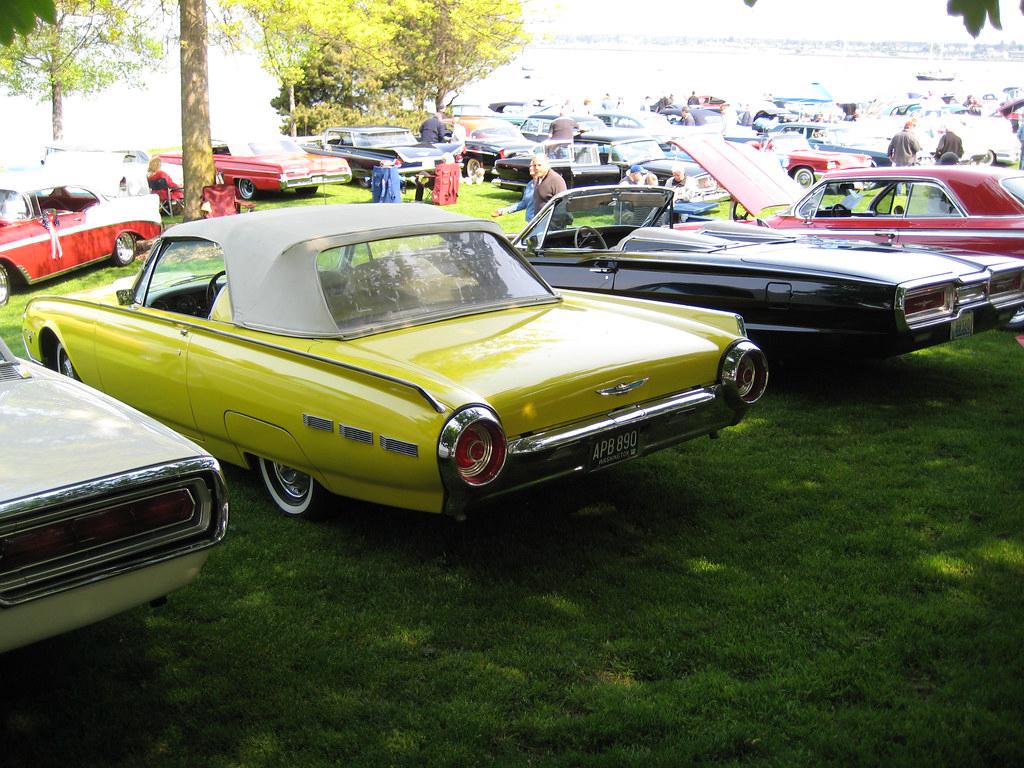
Jump to the muscle years with the 1964 Thunderbird, a testament to Ford's design chops. It blessed us with a more serious and sculpted look—squared-off, mighty, and dripping with opulence on wheels. This version introduced sequential turn signals that made everyone stop and stare as they flashed down the boulevard. It was about class and competence, ruled by a raw engine growl that told muscle cars it was ready to rumble with the best.
Now feast your eyes on 1987. Bask in the Turbo Coupe's prime—a tasty slice of Euro-Americana that spoke in an athletic language of turbocharged bravado. With suave pop-up headlights leading the charge and boasting a ferocious 190 horsepower, this Thunderbird was a kinetic ode to performance, blowing past lesser rivals with 240 lb-ft of torque to spare.
Shift gears to nostalgia-ville, and suddenly we're face-to-face with the memorable 2003 James Bond Edition. Yes, you heard right: a 007 Thunderbird flaunting coral paint and a white hardtop—a nod to its on-screen cameo in Die Another Day. It was more than just a hat tip to Bond; it was a full-blown declaration that the Thunderbird was still in it to win it, echoing those bygone days of boldness and assumed identities as cool as Connery himself.
Each Thunderbird had its charm, a defining uniqueness that built the multi-layered legacy of these classic cruisers. Whether it was the gorgeous swoops of the 1950s models or the muscle-bound tenacity of the 1960s' interpretation, their significance cast long shadows even over the Mustang siblings.
As we salute these iconic Thunderbirds in their various incarnations, remember they weren't merely automobiles. They were ambassadors of style, attitude, and a whole lot of auto nostalgia. Beyond the rumbling engines and glossy frames, the Thunderbird reminds us why we fell in love with cars in the first place—because they were more than machines; they were stories on four wheels that sped us toward dreams that sometimes the road alone couldn't reach.
- Ames C. Solving the classic Thunderbird's overheating problem. Arizona State University News. 2018.