
Generations and Evolution
The Chevrolet Monte Carlo roared onto the scene in 1970, born from the Chevrolet-Chevelle mold with a touch of Grand Prix panache. It started with a knight's crest, chrome grills, and concealed wipers—a car ready to star in its own spaghetti western.
By 1973, the Monte Carlo shed a few inches, gaining Motor Trend's "Car of the Year" badge. The leaner look, long hood intact, pandered to buyers hungry for both elegance and edge. This was smack-dab in the middle of the energy crisis—a time when V8s were bound for bobblehead status.
The mid-'70s brought four headlights stacked like Jenga blocks, not everyone's cup of tea, but it sold like funnel cakes at the fair. Then 1978 hit: the downsizing dilemma. Monte Carlo shed weight, got lighter on its feet. Think V6 replacing V8, but with room still in abundance.
By 1981, out comes a new generation Monte, switching to the G-body. SS was back, flaunting a vivacious 5.0 liter V8, and Aero Coupes snuck in just in time for NASCAR's aerodynamic shenanigans.
The '90s saw Monte Carlo shelved, replaced by Lumina's anonymous styling. But not for long. Chevy resurrected the name in 1995, aiming to spark nostalgia, though it was just a badge voyaging on a warmed-over Impala in disguise.
In the 2000s, the Monte Carlo tried evoking past mystique without sparking passion for gearheads. Yet it persevered as a fan favorite with its racing tie-ins. By 2006, it said its final flex with a V8, but waddled into the sunset, outgunned by rivals with meaner motors.
The Monte Carlo bore witness to shifting eras—each chapter different in tone and tune, from roaring muscle glory to gentleman's racer. It left an imprint on American motoring, one stamped on hoods and fenders that faithfully mirrored the soul of the open road.

Performance and Engine Options
Under the Monte Carlo's hood, it was a playground of power, starting with the big daddy SS 454 from the early days. Unleashing 360 horsepower, the SS 454 roared with a 7-second dash to 60 mph, boasting a 14.9 quarter-mile time. But let's be real, it wasn't just about speed; it was about that deep rumbling V8 soundtrack that could harmonize with the Beach Boys on a cruise.
As we cruised through the years, Chevy tweaked the Monte Carlo's engines to match government regulations and fuel crises. The V8s slimmed down, embracing more sensible outputs while still offering that growl, which felt like it was one set of crossed fingers away from turning the tires into smoke.
In the '80s, the 5.0-liter V8 in the SS wasn't just a nod to nostalgia; it was a determined push to give driving enthusiasts an experience that felt alive and throttle-hungry. Not to mention the NASCAR-ready aerodynamics with the Aero Coupes—because when push came to high-speed shove, it wasn't just about those shoulder pads of power; it was about character.
The '90s saw a temporary reinvention with front-wheel-drive platforms, news that left some high-performance dynamos scratching their heads. But 2000 turned a new page with a line-up that went deep into V6 territory, before finally adding the high-octane punch of a V8 that screamed, "It's about time!" The 5.3-liter V8 packed 303 horsepower, a fitting last hurrah.
Monte Carlo was built on an engine variety that tried to cater to all comers—those seeking an economical runabout or those eager to wake the neighborhood with their spirited exhaust notes. From the brutal SS 454 powerhouses to the efficient V6s, performance was part of the Monte's playbook. It was a car that shaped its identity in torque curves and dyno charts, entwined with racing's competitive edge.

Market Position and Competitors
The Chevrolet Monte Carlo slid into the market like a well-timed brake tap—poised to corner its competition. Born to battle heavyweights like the Ford Thunderbird and the Pontiac Grand Prix, the Monte Carlo sought to combine comfort with class, all while keeping a firm grip on the performance pedal.
Back in the beginning, the Monte Carlo wasted no time framing itself as an icon of personal luxury. You had its distant relatives—Pontiac's refined Grand Prix with European-suited swagger, and Ford's established T-bird brooding with an elegance acquired over time. But the Monte had its own charm, dancing around the line where boulevard cruiser met nascent muscle machine.
Priced to entice—a touch more accessible than the pricier Ford TBird—the Monte sought to woo drivers eager for luxury without reaching for the high shelf, with a spirited nod to performance with the SS badges that carried whispers of racing lineage.
Diving into the '70s, the Monte Carlo had impressive sales beats, signaling Chevrolet had hit the high notes with the masses. As it filed down weight class in '78, its lighter stance allowed it to maneuver through twisty periods when economy felt the squeeze.
By the '80s, sales climbed, even as the Grand Prix revered its gentlemanly roots and the Thunderbird flirted with turbocharged futures. The Monte Carlo SS, returning to the scene like a rock star comeback tour, was ready to revel in racing-inspired aesthetics and aerodynamics.
The sales pitch in subsequent decades saw the Monte Carlo becoming a red carpet regular, despite a trade-off dealing with the era of rebranded Lumina identities until its last hurrah. It found its loyalists—those drawn to its sweeping lines and racing bred visage that never strayed too far from the formula.
The Monte Carlo's journey through years and competitors wasn't a sprint or a battle royale, but more a steady-paced grand tour, boldly skirting the roadways of storied rivalry with the Thunderbird's grace and the Grand Prix's prestige in rear view, yet always underlining its footprint in the collective American powerhouse psyche.

Design and Features
The original 1970 Monte Carlo design was textbook muscle—think chrome grills, long hoods, and a touch of European allure that was just as suited to the highways as it was to a Bond flick's getaway scene. Chevrolet crafted it with concealed wipers on its crisp lines, delivering a luxury coupe that could play both roles: the suave guest of honor and the road warrior itching for a showdown.
The second generation embraced a sleek restyle in 1973 that won over Motor Trend. The Monte Carlo grew more muscular but shed a few inches for a leaner guise. The headlights stacked like a totem in '76, ushering in a bold statement of style choices that for some oozed retro chic, while for others, it was like bringing a flamethrower to a spatula party.
By 1978, Chevrolet had downsized the Monte Carlo, giving it a more compact footprint but loading it with clever touches that made it feel spacious and inviting on the inside. The shift in size didn't steal away any of the interior luxury, where vinyl turned to plush fabric and wood trim swaggered through the cabin. The addition of power everything and a digitized dash in the '80s turned it up a notch.
Through the '80s, the Monte Carlo wore its SS badge proudly. The distinct, sloping nose of the Aero Coupe displayed its track-ready intentions, etching aerodynamic prowess into the very steel of its being—a sort of hand-off from racetrack to city block.
The '90s were a little rough around the edges, with the Monte Carlo badge slapped onto something resembling less luxury and more utility, courtesy of the reborn Lumina. Yet, it learned to strut its stuff in the new millennium. The NASCAR-inspired exterior in the 2000s mirrored its competitive edge, even if the handling didn't always follow the bravado of its appearances.
Inside, its impresario vibe was bolstered with the return of luxury features. Leather appointments, premium stereo systems that could turn static into symphonic experiences, and seating that whispered comfort integrated with a dash of sporty confidence. The Monte Carlo didn't just use a badge to claim its personal luxury title; it doubled down on providing experiences and features that turned every drive into a dream ride.
Legacy and Discontinuation
The Chevrolet Monte Carlo left a mark as brilliant as the streak of a comet in a night sky. But winds shift, and so did the Monte Carlo's tale. The inevitable chapter of discontinuation rolled in during 2007, driven by shifting market dynamics and consumer appetites swayed by crossovers and compact efficiency.
Let's be honest. The Monte Carlo, draped in its former glories, faced a crossroads where all its flair couldn't quite meet the accelerating criteria of modern demand. As consumers leaned towards fuel efficiency, SUV versatility, and tech-laden rides, the grand tourer niche became a dwindling flame. Dealers saw fewer requests for the capacious flanks of the Monte Carlos, and as floor plans shifted, so did Chevrolet's focus onto more thriving segments.
With its exit, the industry waved goodbye to one of the last symbols of the personal luxury coupe era, a category that once celebrated brawn and beauty in balanced harmony. The retreat resonated with car enthusiasts who cherished the Monte's lineage of V8 growls and lengthy lanes commanding presence. Its discontinuation drew a line under the boom of two-door Midwest motoring Americana.
Although production halted, the Monte Carlo's influence transcended its parking slumber. Enthusiasts still rally around this chevrette steed, glossing fenders and engine bay stories harkening to old tracks and dyno days. Behind each pristine restoration lives a community keeping the Monte Carlo mythos alive, fueled by passion, oil, and gear-head dreams casting shadows over new terrains.
Like a favored sports hero who hung up their jersey, its impact remains a proud stand against the influx of the homogenized modern auto landscape. While it may no longer roll off assembly lines, its legacy endures through tales spun down boulevards and whispers exchanged across race-day grandstands—a reminder that cars, like the spirit they embody, never entirely fade.
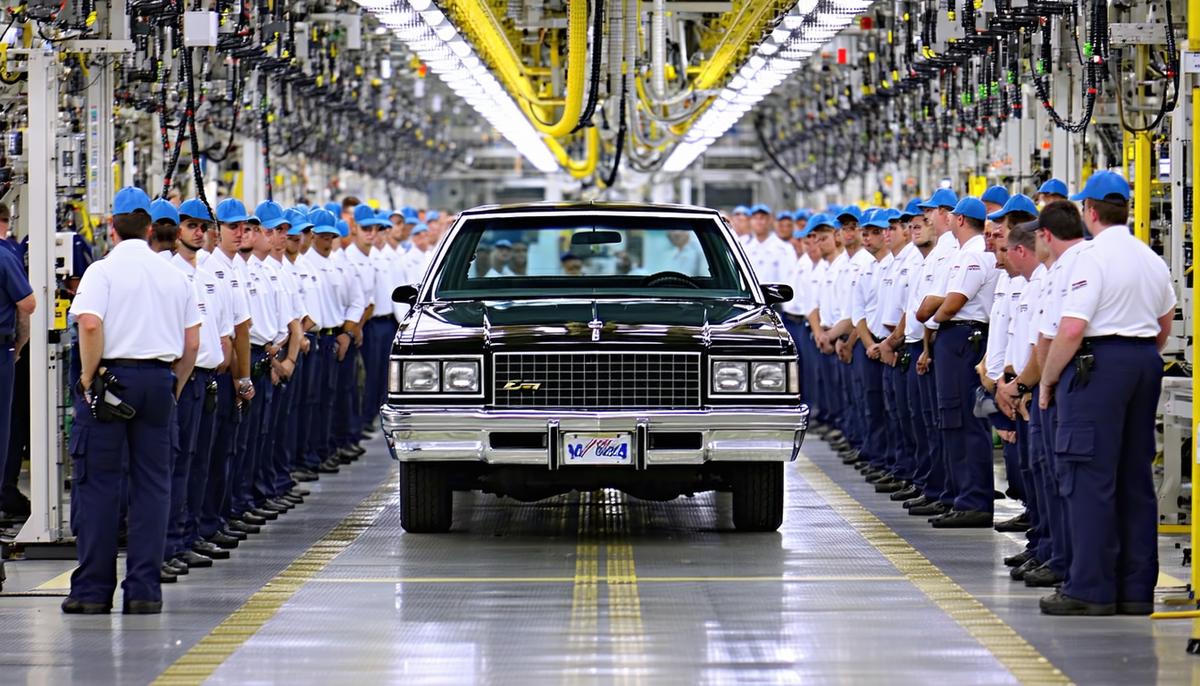
The Chevrolet Monte Carlo stands as a testament to the evolution of American motoring, leaving an indelible mark on the landscape of personal luxury coupes. Its journey through decades of change and challenge reflects a story of style, power, and resilience. Though it no longer graces the showroom floors, its legacy continues to resonate with enthusiasts who cherish its storied past and the memories it created on the open road.
- Automobile magazine. October 1999.
- Car And Driver. Three-car comparison test: Dodge Stratus coupe, Ford Mustang GT, and Chevrolet Monte Carlo.
- Motor Trend. Car of the Year, 1973.
- Motorweek. Monte Carlo SS performance testing, 2006.