
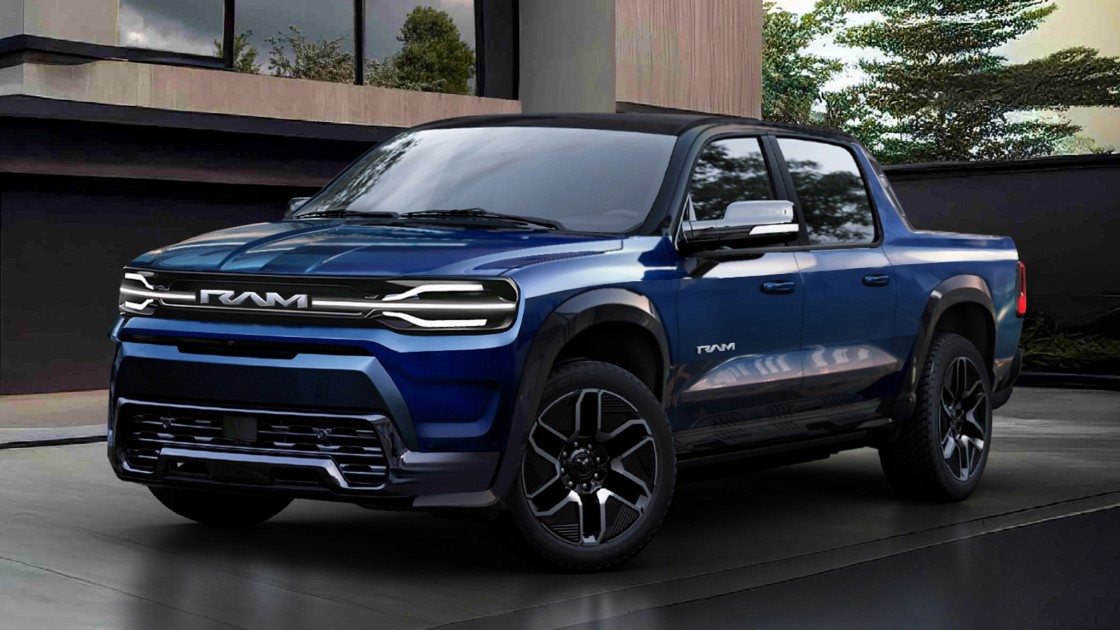
Ram is gearing up to re-enter the midsize truck scene with a familiar nameplate and an all-new approach. The 2027 Ram Dakota is poised to be more than just a nostalgic revival—it’s Ram’s strategic move into an ultra-competitive space where pricing, practicality, and powertrain flexibility matter more than ever. With the pickup market evolving rapidly and full-size trucks pushing well past the $60,000 mark, the Dakota promises to offer a more accessible option for buyers who still want utility without the bloat.
A Legacy Reborn
The Dakota badge returns after a long hiatus. The last-generation Dakota rolled off the assembly line in 2011, and its absence left a void in Ram’s lineup for over a decade. Now, the name is making a comeback, and it’s not just for show. Slotted below the Ram 1500, the new Dakota is expected to be a midsize pickup aimed at lifestyle buyers, urban contractors, and weekend adventurers alike. It will likely rival the Ford Ranger, Toyota Tacoma, and Chevrolet Colorado, but it may also target more lifestyle-oriented trucks like the Ford Maverick.
Platform, Power, and Potential
Ram hasn’t officially disclosed technical specifications, but early reports suggest the Dakota will be built on Stellantis’ STLA Large platform—the same modular architecture underpinning the Dodge Charger and upcoming Jeep Wagoneer S. That means the 2027 Dakota could support a wide range of powertrains, including:
- Gas-only internal combustion
- Traditional hybrids
- Extended-range plug-in hybrids (PHEVs)
- Fully electric drivetrains
If Ram taps into the powertrain catalog of the new Charger and Wagoneer S, the Dakota may be surprisingly potent. A range-topping EV variant could potentially mirror the Wagoneer S’s dual-motor setup, which pushes out 600 hp and 617 lb-ft of torque. That would make it the most powerful midsize truck on the market—by far.
More realistic, however, is a base offering with the 3.0-liter turbocharged inline-six “Sixpack” engine—good for 420 hp in standard output and 550 hp in high-output trim. These figures, even at the lower end, would significantly outgun most competitors in the segment.
What About Price?
Pricing remains unofficial, but expectations are grounded in market logic. Ram will likely aim for a starting MSRP in the low-to-mid $30,000s, allowing the Dakota to undercut the entry-level Toyota Tacoma while brushing against upper trims of the Ford Maverick. That puts it in a sweet spot—appealing to budget-conscious buyers who’ve been priced out of full-size trucks and looking for a balance between utility and efficiency.
For comparison:
- 2024 Toyota Tacoma starts at $33,000
- Ford Ranger starts around $34,000
- Ford Maverick Lariat Hybrid tops out near $37,000
If Ram can offer multiple powertrain options across that price range, it could pull in buyers from both sides of the midsize and compact spectrum.
Built in Belvidere – Eventually
Production is expected to take place at Stellantis’ Belvidere, Illinois plant, which is currently idle. The UAW has signaled that assembly could begin by late 2026, with official market availability coming in 2027. If timelines hold, the Dakota could arrive just in time to surf the next wave of EV and hybrid truck adoption.
Final Thoughts
While the 2027 Ram Dakota is still under wraps, everything we’re hearing points to a truck with serious potential. If it launches with multiple powertrain options—especially electrified ones—it could reshape expectations for what an “entry-level” pickup can be. And if Ram can deliver on value, versatility, and performance, the Dakota could be one of the most important midsize launches in years.
This won’t just be a nameplate revival. It’s a calculated move to expand Ram’s footprint—one unibody panel and turbocharged powertrain at a time.