
Engine and Performance
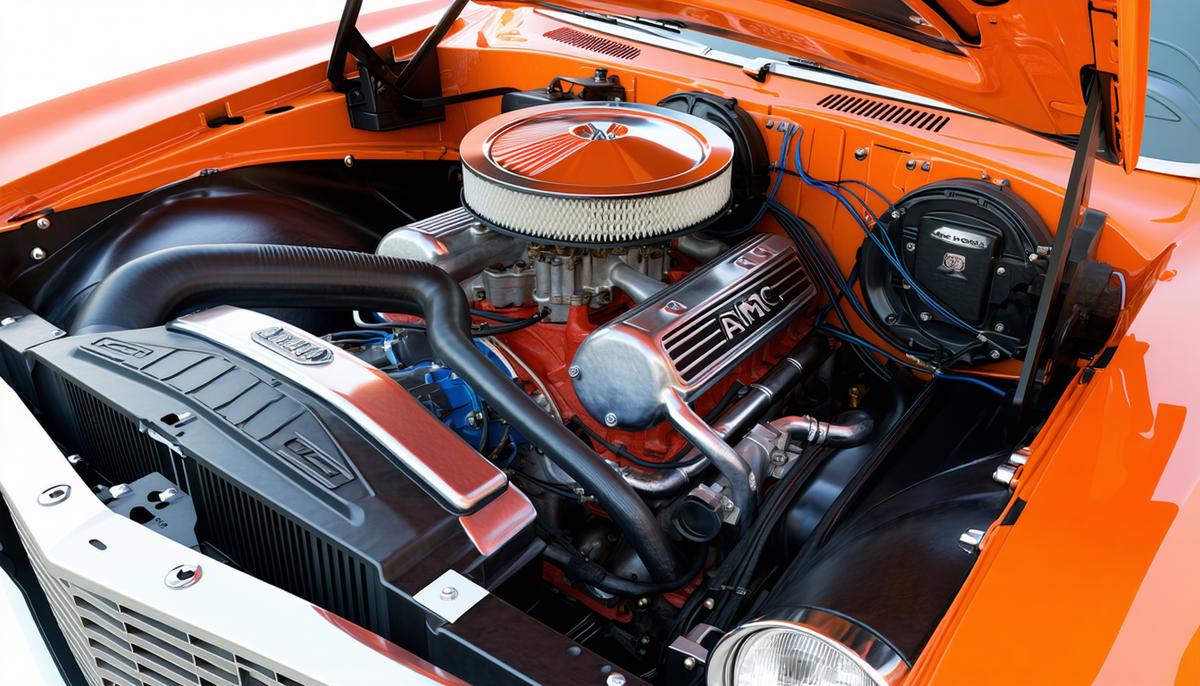
The 1971 AMC Javelin AMX packed a serious punch with its 401 cubic inch V8 engine, churning out 330 horsepower and 430 lb-ft of torque. This powerhouse was paired with either a four-speed manual or a three-speed automatic transmission, ready to tear up the racetrack.
The 401 V8 wasn't just about raw power; it was built to last. Features included:
- Four-barrel carburetor
- Racing-spec aluminum pistons
- Lower 9.5:1 compression ratio
This beast could rocket from 0-60 mph in 5.1 seconds and crush the quarter-mile in just over 13 seconds.
This engine's prowess wasn't just theoretical. The Javelin AMX dominated the Trans-Am series, snagging back-to-back championships in '71 and '72. This was no small feat, considering it was up against the big boys like Ford's Mustangs and Chevrolet's Camaros.
The Javelin's excellent power-to-weight ratio meant it could hold its own against heavyweights like the Chevelle 454, even if straight-line speed wasn't its primary focus. Lighter than its beefier rivals, the AMX's aggressive bodywork and potent engine turned it into a fire-breathing dragon among muscle cars.
Design and Features
The 1971 AMC Javelin AMX wasn't just a car; it was a time capsule of audacity wrapped in steel and chrome. From its menacing grille and snarling headlights to its muscular haunches, every inch screamed speed.
Step inside, and you're greeted by a rally-inspired cockpit that could make a jet fighter feel pedestrian. The hooded gauge cluster featured:
- 140 mph speedometer
- 8,000 rpm tachometer
The legendary 'Go Package' was a must-have for any speed freak. For just $499, you got:
- Dual exhausts
- Steel spring-loaded quick release pins
- Heavy-duty suspension
- Twin-Grip differential
AMC offered eye-catching paint schemes and decal sets that dared you to stand out. The "power blister" hood with Ram Air induction looked like it was inhaling miles of road. Stylishly sculpted spoilers enhanced both looks and aerodynamics, ensuring your Javelin turned heads even at a standstill.
The 1971 AMC Javelin AMX was more than a car; it was a rolling symphony of American ingenuity and ambition. Whether you admired its lines or unleashed its power, it offered an experience unrivaled by today's tamer rides.

Racing Legacy
The 1971 AMC Javelin AMX didn't just show up to race; it stormed into the SCCA Trans Am Series like a rock star crashing a party. With Mark Donohue at the wheel and Roger Penske pulling the strings, this underdog turned into a Trans-Am titan.
Donohue wasn't just any driver; he was a master tactician who could squeeze every ounce of performance from a machine. Penske, the wizard of motorsports management, turned the Javelin AMX from an underdog into a champion.
Sporting its red, white, and blue livery, the Javelin blazed through circuits with unstoppable zeal. Each race was a chance to defy expectations, challenging Detroit's finest with raw talent and gritty performance.
The Javelin AMX's back-to-back championships in 1971 and 1972 weren't just wins; they were battles against the mightiest titans of American muscle car racing. These victories resonated through the racing community, proving that heart could triumph over deep pockets.
The legends of Donohue and Penske continue to drive the story of an era where racing was more about guts than gadgets. The 1971 Javelin AMX wasn't just a car—it was a revolution on wheels, forever immortalized in the hall of fame of automotive grit and glory.
Market Position and Competitors
The 1971 AMC Javelin AMX was the scrappy underdog in the muscle car world. It didn't have the famous name of a Mustang or Camaro, but it knew how to make an impact where it mattered: under the hood and on the track.
With its 401 V8 engine, the Javelin AMX put its heart and soul into every rev while staying light on its feet. Those Camaros and Mustangs may have had the marketing muscle, but not the edge AMC had in agility and racing spirit.
Sure, cars like the Chevelle LS6 with its 454 were monsters on the drag strip. But throw in a few tight corners, and suddenly the Javelin AMX, with its Trans-Am racing pedigree, became the nimblest partner in the dance.
The Javelin AMX did have its challenges:
- AMC's smaller budget meant fewer upgrades over time
- Tougher battle against the deep R&D pockets of Ford and Chevrolet
- Marketing lacked the punch of the big players
But where AMC lacked in clout, it made up for in moxie. The Javelin AMX brought a unique blend of accessible performance, rebellious styling, and engineering smarts to anyone daring to stray from the herd.
In the landscape of muscle cars, the Javelin AMX was a bold curve against the straight lines of its competitors. It might not have outnumbered the Mustangs or outmuscled the Chevelles, but in its uniqueness and unapologetic persona, it secured its legendary status.

Cultural and Historical Impact
The 1971 AMC Javelin AMX was the hidden ace in the high-stakes poker game of muscle cars. During an era when the streets roared with powerful V8s and daring designs, AMC's plucky underdog carved out its own niche.
As American culture stomped the pedal to the metal, AMC decided it was time for a revolution in steel and chrome. The Javelin AMX hit the scene with fire under its hood and racing stripes that looked more like battle paint, ready to take on the Titans of Detroit.
What made the Javelin AMX stand out? It wasn't just raw power, but a distinctive character born from:
- Ambition
- A chip on its shoulder
- High-performance features
- Trans-Am racing pedigree
The Javelin AMX made its mark among the automotive underground and kindred spirits who looked for more than just a well-known badge. Its victories in the SCCA Trans-Am series carved a cultural niche that still resonates with modern car lovers and historical enthusiasts alike.
Today, the Javelin AMX isn't just a collectible—it's a living legend roaring through conversations at car meets and echoing in the dreams of speed enthusiasts. It embodies the grit of its era and continues to inspire admiration for its audacity to defy norms and leave a lasting legacy.
For many gearheads, the AMC Javelin AMX wasn't just a muscle car; it was a heavyweight in the culture ring, punching well above its weight. Its spirit lives on, a testament to an era when muscle cars weren't just vehicles, but icons of identity and rebellion.

The 1971 AMC Javelin AMX stands as a testament to the audacious spirit of American muscle cars, capturing the essence of rebellion and performance. Its legacy is etched in the annals of automotive history, celebrated for its distinctive character and racing pedigree. This car wasn't just about power; it was about leaving an indelible mark on the culture of speed and style.
- Mitchell D. AMC Muscle Cars. Motorbooks International; 2000.
- Foster P. AMC Performance Cars 1951-1983. Motorbooks International; 2013.
- Sessler P. American Motors Corporation: The Rise and Fall of America's Last Independent Automaker. Motorbooks; 2008.