
History and Evolution
The Plymouth Barracuda burst onto the scene in 1964, just days before the Mustang. Based on the Plymouth Valiant, it sported the largest rear window in any production car at the time. Engine options ranged from a modest slant-six to the zippier 273 V8.
In 1967, the second generation broke free from its Valiant roots with a fresh look and longer wheelbase. The lineup expanded to include:
- Fastback
- Hardtop coupe
- Convertible
The Formula S package added firmer suspensions and power steering for tighter handling.
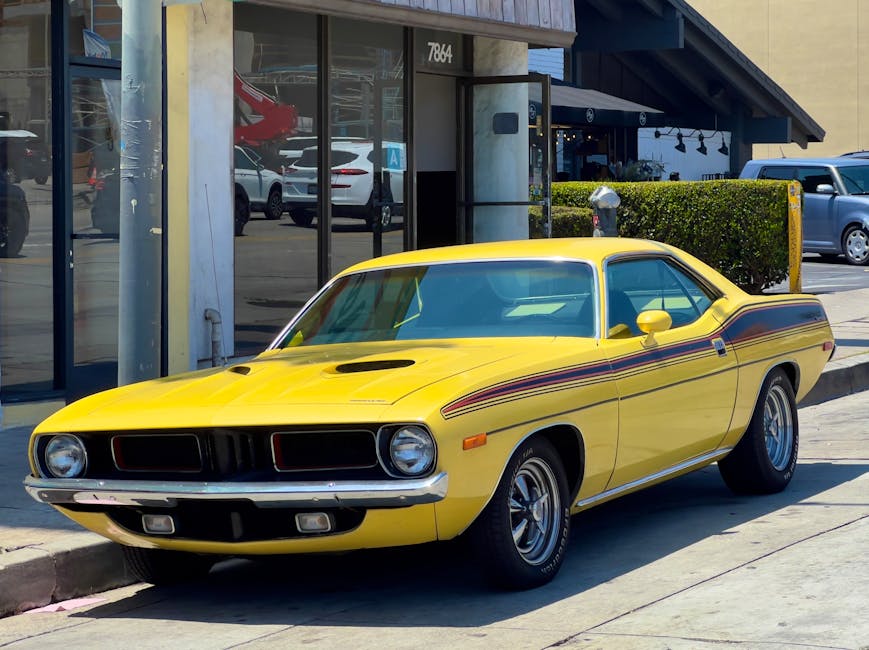
The 1970 revamp marked the Barracuda's leap into high-performance territory. Now sharing the E-body with the Dodge Challenger, it offered the monstrous 426 Hemi engine and eye-catching "High-Impact" colors. This era cemented the 'Cuda's place in muscle car lore.
As emissions regulations tightened in the early '70s, the Barracuda's fire began to dim. By 1974, production ceased, closing a chapter in American muscle car history. Today, rare 'Cuda models fetch astronomical prices at auctions, a testament to their enduring appeal.
Performance and Specifications
The Barracuda's engine lineup was a muscle car playground. The 340 cubic inch V8 hit a sweet spot, churning out 275 horsepower and 340 lb-ft of torque. It was agile and responsive, making it a favorite among street and track enthusiasts.
For those craving raw power, the 426 Hemi was king. Packing 425 horsepower and 490 lb-ft of torque, it turned quarter-miles into blur-fests. The shaker hood wasn't just for show – it was a crown atop this street dominator.
Transmission options included:
- Four-speed manuals for those who liked to row their own gears
- Smooth TorqueFlite automatic for convenience
Sure-Grip differentials and rally setups were available for those looking to carve corners with precision.
The 'Cuda's styling was as bold as its performance. Every curve and crease oozed attitude, making it a head-turner whether parked or prowling. Even the air vent hum complemented the deep rumble from its tailpipes, creating a symphony of muscle car magic.

Cultural Impact and Legacy
The Barracuda didn't just participate in the muscle car era – it helped define it. Standing toe-to-toe with icons like the Mustang and Camaro, it embodied the spirit of high-octane American performance.
On screen, the Barracuda became a star in its own right. The yellow '71 Hemi 'Cuda convertible in "Nash Bridges" wasn't just a car – it was a character. Its appearance in "Fast & Furious 6" introduced a new generation to its tire-shredding legacy.
In the collector world, Hemi 'Cudas have become holy grails. Auction prices have skyrocketed, reflecting a growing nostalgia and reverence for these muscle car icons. For example:
"A numbers-matching (original engine with body), four-speed blue 1971 hemi 'Cuda convertible reached a record $3.5 million at Mecum Auctions in June 2014, becoming the most expensive hemi 'Cuda ever sold."
The Barracuda's appeal transcends time. It represents an era of unbridled automotive audacity, ensuring its place in muscle car folklore for generations to come.
Design and Styling
The Barracuda's design was a middle finger to subtlety. Its streamlined body screamed speed, available in fastback, notchback, and convertible styles. Each variant had its own personality quirks, from aggressive side scoops to eye-catching badges.
Inside, the cockpit prioritized the driver. Bucket seats hugged you tight, while the tilted dash whispered promises of speed. Gauge clusters peered out like eyes, eager for action.
But it was the paint options that really set the 'Cuda apart. High-impact hues like:
- 'Plum Crazy'
- 'Sassy Grass Green'
- 'In-Violet'
- 'Tor-Red'
These vibrant shades transformed the Barracuda from a mere car to a rolling art piece.
The cherry on top? The 'shaker' hood. This functional air intake peeked through the hood, nodding in agreement with every rev. It wasn't just eye candy – it was a not-so-subtle hint at the beast lurking beneath.

Challenges and Criticisms
For all its muscle, the Barracuda had its share of quirks. Handling was more WWE than ballet, with a front-heavy weight distribution that made cornering a wrestling match. Even the Formula S package couldn't fully tame its tendency to lean in tight turns.
Braking was another sore spot. The standard drum brakes were fine for cruising, but high-speed stops could get dicey. It was a "hold onto your hat" moment when you needed to scrub off speed in a hurry.
Market competition was fierce. The Ford Mustang, with its blend of performance and mass appeal, often overshadowed the 'Cuda in sales figures. For every Mopar fan swooning over the Barracuda's loud aesthetics, there were others drawn to rivals with better all-around performance.
These issues bit into the Barracuda's market share. But for die-hard fans, these quirks were part of the charm. The 'Cuda was the rebellious rocker of the muscle car world – not for everyone, but those who loved it did so with unbridled passion.

The Plymouth Barracuda, with its bold design and powerful engines, remains a symbol of the muscle car era. Its legacy continues to captivate enthusiasts, reminding us of a time when cars were more than just machines—they were expressions of freedom and rebellion.
- Motor Trend. January 1968 issue.
- Mecum Auctions. June 2014 auction results.