
Imagine a time when cars weren't just about getting from point A to B but were expressions of bold innovation and daring design. The Oldsmobile Toronado was one such marvel, standing out with its distinctive engineering and style that captured the imagination of car enthusiasts everywhere.
Innovative Engineering and Design
Picture this: it's the 1960s and you're cruising the streets in an Oldsmobile Toronado, a car that seems like it's been plucked straight from the automotive future. This beast sports engineering quirks that set it apart from the rest.
Let's talk about its front-wheel-drive system—a rarity in American cars at the time. The Toronado flaunts a chain-driven transmission that runs on sprockets, transferring mighty torque to its front tires. Imagine a giant chain driving a 425-cubic-inch, 385-horsepower V8 engine. The result? Smoky front-wheel burnouts that give rear-wheel-drive giants a run for their money.
The Toronado had a unitized structure that made it twice as rigid as the Olds 98, offering a sturdy ride. It had stylish torsion bars up front, while the rear had extra shocks to keep everything in check.
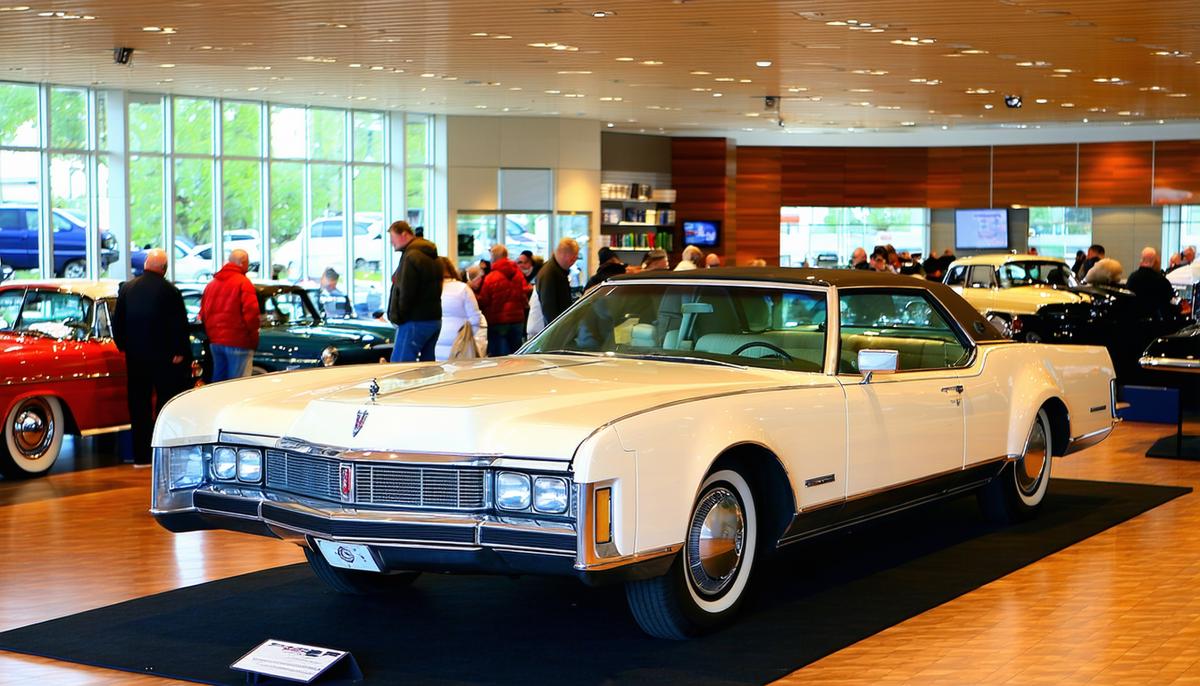
Now, let's marvel at the design. The Toronado's silhouette was sleek as a cat stalking prey. Its fastback style, aggressive wheel wells, and seamless bumpers turned heads. The Toronado didn't just hide headlights; it hid them behind a disappearing grille—a magician's trick for the roads. And those 15-inch wheels? They gave a nod to the legendary Cord 810 while branding the Toronado as a symbol of design innovation.
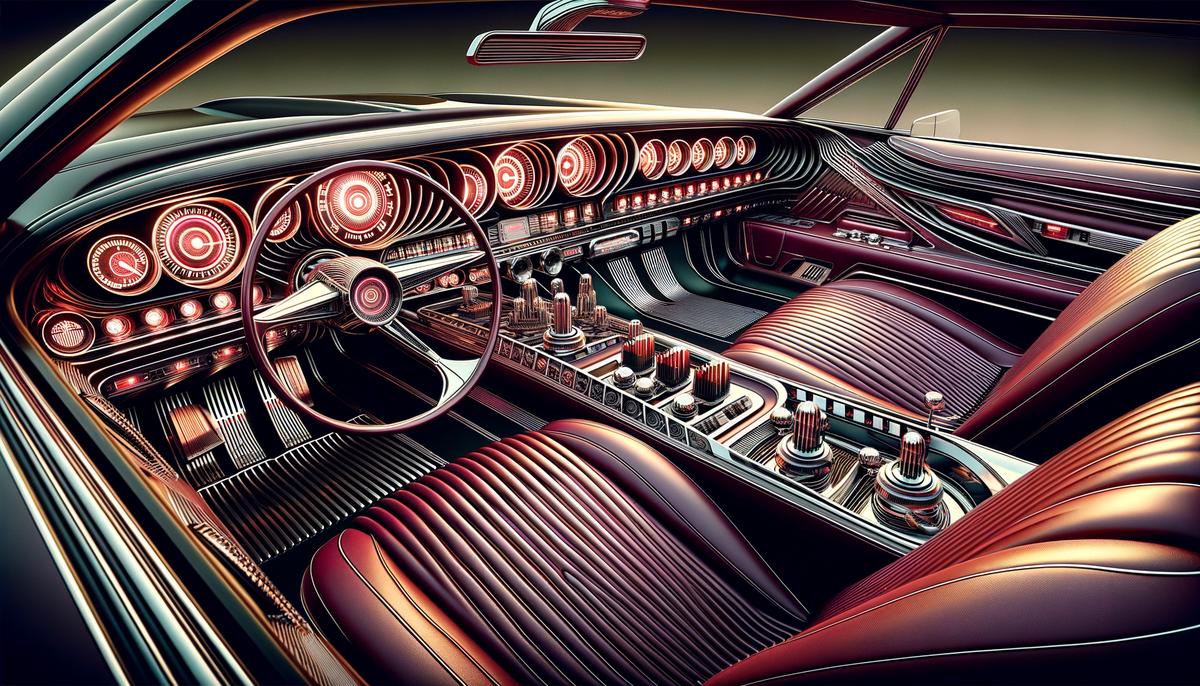
Slide into the interior, and the extraordinary continues. The cockpit embraced you with its rocker switches and drum speedometer, creating an ambiance more spaceship than car. Oldsmobile dubbed it the "driver podium," a fitting name for a command center that was part retro, part futuristic dream.
The flat floor provided room for six, making the Toronado a rolling living room. Olds went as far as tossing a column shifter and a bench seat into the deluxe model, ensuring comfort didn't take a back seat to performance.
While the Toronado wasn't perfect—those drum brakes were far from stellar—the innovation packed into its frame was undeniable. It's a classic that promised the moon and delivered a journey to the stars.
Performance and Handling
Cranking the ignition of the Oldsmobile Toronado is like unleashing a sleeping giant, a muscle-bound colossus ready to flex its 385-horsepower muscles. The 0-60 dash was tackled in a respectable 8.6 seconds, which for its era, was enough to leave the competition choking on its dust. Throw in its ability to cruise comfortably at 80 mph, and you've got yourself a highway hero.
But let's set the throttle straight—this beast had its quirks. The Toronado's front-heavy nature, carrying 60% of its bulk on the nose, made handling an artful dance. For those not ready for a quickstep, understeer became their unintended partner. Picture gliding into a corner with a bit too much enthusiasm and feeling the hefty snout eager to lead you off the tarmac.
Oldsmobile tried to tame this with some serious engineering wizardry—a torsion bar up front and an additional pair of horizontal shocks in the rear. These elements worked together like a pit crew, aiming to balance the ride and counteract the weight's front bias. Yet, on twisty roads, finesse was key. Applying power mid-corner could have you heading wide-eyed toward a scenic ditch; pull back on the accelerator, and the understeer turned to a dive—inwards, rapidly.
Despite these handling rollercoasters, once you got the hang of its eccentricities, the Toronado offered a ride as predictable as your grandma's advice—steady and reassuring on the open road. The suspension may have felt like surfing a tempest at times, but its low-speed stability kept drivers calm even when crosswinds tried their best impersonation of a sucker punch.
For those willing to master its intricacies, the Toronado was more than a collection of mechanical parts—it was a grand tourer that whispered (or sometimes roared) tales of engineering boldness and design audacity. And in automotive classics, who doesn't love a story with a little bit of attitude?

Braking and Safety Concerns
Now, let's talk about a part of the Oldsmobile Toronado that many would rather sweep under the plush carpet—those notoriously inadequate drum brakes. For a car that otherwise matched futuristic aspirations with its bold front-wheel-drive and jaw-dropping design, the brakes felt an awful lot like a caveman attempt to stop a stampeding mammoth.
Imagine hurtling down the road in this 4,500-pound behemoth, feeling every ounce of its power beneath your foot, only to be betrayed by a braking system that seemed more like an afterthought. It wasn't that the Toronado couldn't stop; it's just that you had to send the drum brakes a memo a week in advance to actually do so effectively.
Designed during a time when disc brakes were entering the scene but hadn't yet revolutionized braking standards, the Toronado stuck with all-around drum brakes—a relic ill-suited to manage the demands of a car this large and powerful. The dilemma was simple: excessive weight concentrated at the front end could turn even casual braking into a white-knuckle affair. Smoke from the brakes was not an uncommon sight, and overheating was the not-so-delightful bouquet that accompanied spirited driving.
Hit the brakes hard enough, and the Toronado didn't just ask nicely for you to slow down; it practically negotiated like a stubborn mule—unwilling to drop speed without a dramatic crescendo of fading efficiency and downright terrifying oscillations.
The safety implications of this oversight were not trivial. In the game of automotive roulette, Toronado drivers were rolling the dice every time they ventured onto the open road with enthusiasm. Sure, its straight-line stability kept things calm, but those brakes were the ultimate test of your predictive driving capabilities.
This wasn't just about some misplaced nostalgia for bad brakes—it was about reliability. A car as hefty and powerful as the Toronado needed stopping power to match its go power. Drum brakes just weren't up to the job, making every drive a calculated gamble in physics and wishful thinking.
Ultimately, the Toronado's inability to match its forward thrust with adequate stopping force left a cloud over its impressive engineering triumphs. A reminder that in the art of design and speed, even the daring can falter if they overlook one fundamental truth: any car that can go must also be able to stop, and do so with conviction.
Market Reception and Legacy
When the Oldsmobile Toronado roared onto the scene, it did so with all the fanfare of a rock star making a grand entrance. The initial market reception was a mixture of awe and skepticism, with consumer feedback reflecting a spectrum of emotions ranging from ecstatic admiration to cautious optimism. Enthusiasts marveled at its audacious design and pioneering front-wheel-drive, heralding it as a feat of engineering wizardry worthy of the spotlight.
However, in the realm of cold, hard sales numbers, the Toronado found itself in a bit of a bind. Oldsmobile managed to sell about 41,000 units in its debut year of 1966—a respectable figure that testified to its allure. Yet, as the initial buzz faded, sales started slipping, dropping nearly by half the following year. This wasn't merely a result of waning interest; the Toronado's hefty price tag and avant-garde features confused the average consumer—especially in an era where convention ruled the showroom.
Consumer feedback ran the gamut from exhilaration over its plush interior and radical looks to utter disbelief at its brake system. Headlines praised its innovation but also highlighted niggling issues, chief among them those trepidation-inducing drum brakes.
Still, the Toronado left a lasting legacy across the automotive industry, paving the way for future design philosophies and technological concepts. The utilization of front-wheel-drive in an American muscle car was a harbinger of things to come, offering a glimpse into a drivetrain design that would later dominate the industry in smaller cars.
The Toronado's bold front-wheel-drive gambit was eventually embraced by Cadillac's Eldorado, with many of its design and mechanical concepts trickling down into the mainstream as the years went by. It embodies the spirit of experimentation, heralding the kind of innovation that would later support high-volume models and economy cars alike.
Today, the Toronado exists as a celebrated classic—a testament to bold automotive innovation and adventurous design. It may not have set sales charts ablaze, but it occupies a unique chapter in automotive history as a daring pioneer of front-wheel-drive performance, leaving a well-burned trail for others to follow.
Interior and Comfort Features
Stepping into the Oldsmobile Toronado was like entering an era where luxury was defined by imagination and boundaries were meant to be broken. This wasn't just another American muscle machine; the Toronado wanted you to know it had the sophistication to match its brawn.
The first thing that strikes you is the flat floor. Thanks to its front-wheel-drive configuration, the absence of a hump running through the cabin is as refreshing as sipping a cool drink on a blistering summer's day. This design quirk translated into a more open, spacious environment, shifting perceptions of what an American car's interior could be.
Up front, the generous bench seats offered comfort reminiscent of your favorite recliner. Whether you were driving solo or with a full house, the Toronado promised a cozy cocoon of travelers. Even in the deluxe model with its column shifter, these seats ensured you didn't have to sacrifice comfort for functionality.
The futuristic dashboard was a celebration of Oldsmobile's innovative spirit. It boasted a unique driver-focused layout, with rocker switches and the iconic drum speedometer. This wasn't a mere dashboard; it was a spectacle—filled with blinking lights and intuitive controls reminiscent of a retro-futuristic dreamscape.
The steering wheel and center console spoke a language of elegance and subtlety. Although adorned with Olds' wooden accents (albeit fake), it still managed to channel the charm of bygone luxury. The Comfortron air conditioning system was the cherry on top, automatically adjusting the temperature to keep you in an envelope of perfect comfort without lifting a finger.
Ultimately, the Toronado's interior wasn't just a place to occupy while you hurtled toward your destination; it was part of the journey, heightening the sense of luxury that defined this audacious ride. While some aspects may have slid towards excess—looking at you, dashboard lights—the end result was undeniably captivating. It's clear that Oldsmobile wanted its drivers to feel they were part of something special, and in doing so, they succeeded in creating a space that echoed with both innovation and indulgence.
The Oldsmobile Toronado remains a symbol of boldness in automotive history, showcasing how daring design and innovative engineering can leave a lasting legacy. It reminds us that sometimes, taking risks and challenging conventions can pave the way for new possibilities and inspire future generations.
- Car and Driver. Oldsmobile Toronado Road Test. April 1968.
- Motor Trend. Oldsmobile Toronado: Car of the Year. December 1965.
- Murilee M. Junkyard Find: 1988 Oldsmobile Toronado Troféo. The Truth About Cars. July 22, 2019.