
History and Evolution
Dodge Coronet's journey is a thrilling lap through automotive history. This beast first roared onto the scene in 1949 as Dodge's top-tier trim level. Early models packed a 230-cubic-inch flat-head six-cylinder engine churning out 103 horses.
In 1953, Dodge cranked up the drama with the Hemi's debut — the 241-cubic-inch "Red Ram" set over 100 land speed records at Bonneville Salt Flats. By '55, "Forward Look" styling swept the lineup, adding flashier lines without losing that muscular allure.
After a hiatus from 1960 to 1965, the Coronet returned with a vengeance, now a brawny contender in the muscle car wars. The slant six engine was available, but the real thrill came from the V8 roar, potentially reaching 425hp in the vaunted 426 Hemi. By 1968, the design took on a coke bottle silhouette that seemed to whisper "speed" even when parked.
The R/T and Super Bee models of the late 60s were like rocket fuel on wheels. The R/T boasted a 375hp 440 V8, while the Super Bee flaunted rear-wrapped stripes and a special insignia, always itching for a drag strip showdown.
By the early 70s, changing times forced even the Coronet to conform. Government regulations and the oil crisis cast a shadow over muscle cars. Sales plummeted, and by 1976, the Coronet's brawny charm faded out, replaced by the more sensible Monaco.
Today, spotting a Coronet is like stumbling on a forgotten symphony that still strikes the right chords — a nod to an era when cars had distinct faces and untamed spirit.

Performance and Engineering
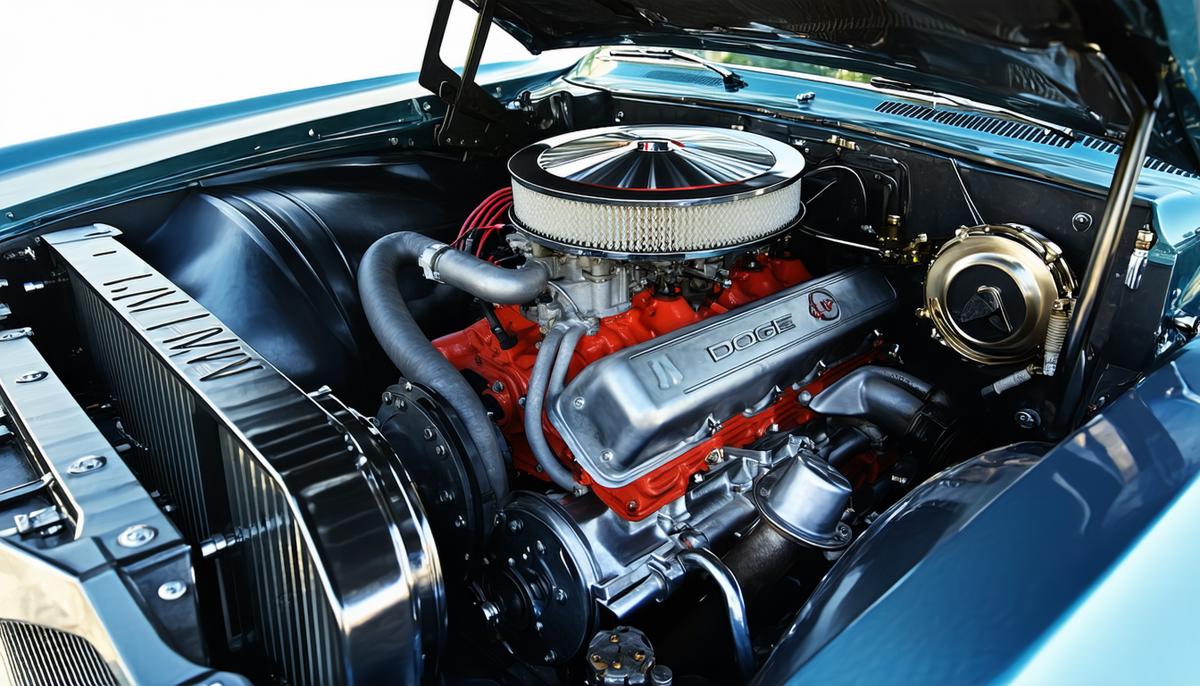
Let's dive into the heart of the beast — the performance and engineering that made the Dodge Coronet a rubber-shredding, asphalt-punishing monster.
The 440 Magnum became synonymous with high-octane thrills, packing over 375 horsepower. It was like unleashing a titan every time you hit the throttle, sending you rocketing down a quarter-mile strip in a heartbeat.
But if the 440 Magnum was the brass-knuckled brawler, the 426 Hemi was the sledgehammer. Known as "The Elephant" due to its massive size and power, this 425-horsepower beast turned the Coronet into a legend. It wasn't just fast; it revolutionized speed, boasting a top-tier drag-strip pedigree that made gearheads drool.
The secret sauce? Hemispherical combustion chambers that allowed for better airflow and higher compression. This engineering marvel is why these cars could tear through straight lines with reckless abandon, leaving competitors in the dust.
The Coronet, especially in Super Bee form, was a regular feature in drag racing circles. Its powerful torque delivered crushing launches and blistering quarter-mile runs. It wasn't just about raw horsepower; it was about hitting that perfect balance between brute force and precision engineering.
In the world of classic muscle, few names resonate like Coronet. When you get behind the wheel of this legendary beast, you're not just driving; you're commanding history to rumble alive beneath you.
Notable Models and Variants
Let's talk about the cream of the Coronet crop: the R/T and Super Bee. These variants didn't just exist; they ruled the roads and owned the tracks.
The Coronet R/T burst onto the scene in 1967, embodying road-and-track performance. Under the hood, you'd find a robust 440 Magnum engine spitting out 375 horses. For the real daredevils, the optional 426 Hemi turned this thoroughbred into an untamed stallion with 425 horsepower. Driving this package meant you'd better hold onto your hats—and your hearts.
Now, shift gears to the Dodge Super Bee, the unabashed rebel of the Coronet family. Introduced in 1968 as a budget-friendly muscle monster, the Super Bee took pride in breaking norms with its unforgettable rear-wrap stripes. We're talking pure drag-strip dynamite here, folks. With high-performance engine options, including the forceful 440 Magnum, this was a car that wore its power on its fenders.
While the Super Bee's production numbers were modest, around 7,500 in its first year, its impact was anything but small. The sheer presence of this car on the drag strip created an adrenaline-pumping spectacle. It wasn't just another coupe—it was a brawler in a bee's costume.
Both the R/T and the Super Bee stood as proud pillars in the temple of Mopar muscle, each offering unique spins on the raw performance ethos. They roared through the muscle car era, cementing their status as icons, influencing not just the cars that followed, but the entire culture of speed and power.
Cultural Impact and Legacy
The Dodge Coronet might not have the Hollywood star power of some muscle cars, but it's left tire tracks all over car culture. Remember its cameo as the Cop Car in "The Blues Brothers"? Whether tearing through 1970s streets or chasing Jake and Elwood, it became an unexpected star, burning rubber into the consciousness of car lovers everywhere.
But the real stage for the Coronet's cultural role is in the garages and hearts of classic car nuts like us. Spotting one at a show is like finding a unicorn in a herd of Mustangs and Chevys. Its rarity makes gearheads go wild.
For collectors, the Coronet isn't just about machine might; it's a time machine to when America was obsessed with horsepower, vinyl interiors, and racing stripes. Those rare R/T and Super Bee variants? They can fetch top-tier prices, sometimes hitting six figures if the stars of originality align.
Driving a Coronet today isn't just about the thrill of the throttle; it's about preserving a vital chapter of automotive lore. It's a connection to a time when Detroit was an innovator rather than a survivor, when raw engine power meant everything, and when the quest for speed defined a generation.
The Coronet might not have been the fastest or most renowned, but its legacy roars in the hearts of those who understand the exquisite blend of power, style, and spirit that it brings to the muscle car table. It's not always about being the loudest; sometimes, it's about being the steady performer that true enthusiasts appreciate. And that, my friends, is where the Coronet truly shines.
In the grand saga of American muscle, the Dodge Coronet stands as a testament to an era where power and style were paramount. Its legacy continues to resonate with those who appreciate the raw spirit and engineering prowess that defined a generation. The Coronet may not have been the loudest voice in the muscle car choir, but its enduring impact is felt by enthusiasts who cherish its place in automotive history.
- Smith N. The Dodge Coronet: Classic Muscle at its Best. Classic Car Magazine. 2022.
- Manney H. Road Test: Dodge Coronet R/T. Road & Track. 1967.
- Regular Cars. Dodge Coronet 440 R/T: Regular Car Reviews. YouTube. 2018.
- Hemmings Classic Car. Dodge Coronet History. Hemmings Motor News. 2020.