
Evolution and Design
Move aside, folks, because here comes the Chevy El Camino—a rollercoaster of an automobile tale that starts in 1959 and rolls its way into the hearts and homes of Americans by 1987. This isn't your average chunk of sheet metal. It's part pick-up, part passenger car, and all deliciously bold and bizarre.
Kicking off in 1959, the El Camino strutted its stuff, borrowing its swagger from a modified Brookwood station wagon. Picture it: a car that's not quite a car but isn't really a truck either! This Frankenstein of the automotive world turned heads with its batwing fins and classy trim plucked straight from the stars.
But let's not get ahead of ourselves. The first El Camino faced down some tough times. Market forces and a little monster known as "The Ford Ranchero" meant the El Camino's debut didn't last long, wrapping up with the class of 1960. But, folks, heroes never die—they just come back stronger. Fast forward to 1964 and there's the El Camino again, now perched atop the Chevy Chevelle platform, sporting those muscle-flexing V8 engines that catapulted it out of the category of mere utility vehicle.
The second-gen (1964-1967) darling with its trimmed-down wheelbase hitched a ride on the Chevelle train, and baby, was it something! Gone were the fins, replaced by muscles—a hunky V8 that could push out up to 375 glorious horsepower. It made heads turn and speedometers spin, proving this ride could bench press any heavy load you needed by day and delight during evening cruises.
Then comes 1968 to 1972, when El Camino truly embraced the disco fever of muscle—enter the SS 396 version, packing the formidable LS6 engine in its arsenal, ready to rock the road like a glittering vinyl single. Quad-stacked headlights, beefy engines, and gliders that would put most sports cars to shame in a 0-60 showdown made sure the El Camino's reputation was sky-high, even while EPA regulations were aiming for the company's wings.
By 1973, things started to bulk up. Fourth-gen saw El Camino go bigger—but not necessarily better. Though now hosting the heft of a boat anchor, safety and comfort became its calling cards. The thing could carry a load and plow through almost anything set in front of it, but the golden era of raw muscle had stepped back behind the curtain.
And then there was the fifth and final generation, saddling up from 1978 to 1987. The design grew sleeker again (thankfully), but diesel options were here and V6 engines started singing their tune. Ford had bailed on their Ranchero by '79, leaving El Camino as the king of the hybrid heap. However, trends change like fashions, and by '87, buyers wanted more than a two-seat party with trunk space.
Chevy kept the El Camino alive with options, bringing the diesel in '82 before gas standards nudged it out. And who could forget the crazy-but-true names like Black Knight or Royal Knight? By now, production had gone south (as in, down Mexico way), but despite a sunset in 1987, El Camino left its mark. It's remained beloved as a retro darling—that automotive unicorn that's a little bit this, a little bit that, and a whole lot exciting.
Performance and Variants
Now, let's dive deep into the roaring heartbeats of the El Camino—where all the magic happens. Under the hood, this beast was an absolute buffet of performance options. Starting with those early models, Chevy's management knew that power was essential—and boy, did they deliver. We saw engines like the 300-horsepower V8 that graced the 1964 model; this ain't your grandma's grocery-getter—unless grandma liked doing her grocery runs in style!
But let's really set the scene in 1970, when the El Camino strutted its stuff with a heart-pounding 450-horsepower LS6 454 V8, a monster that not only defined it as a contender in the muscle car arena but also stamped its ticket to automotive legend. This engine roared with such ferocity it could peel the paint off a fence post from a block away.
Take a swig of the rock 'n' roll '70s with options like the big-block SS models which offered a smorgasbord for the daring:
- Turbo-Jet V8 singing the siren song of the gearhead gods
- SS 396 version with the formidable LS6 engine
- Quad-stacked headlights for that menacing look
It's no exaggeration to say these engines were about as close to a wild stallion as you could get—eat your heart out, Chrysler Hemi.
As we cruised into the era of gas crunches and smog regulations, the El Camino didn't exactly throw in the towel but found itself backed into a corner. These later models incorporated more "responsible" engines, a far cry from their feral predecessors. Yet, beneath all the business-like facade lurked potential; under the lid of every final-gen Elky lay the same spirit of rebellion, especially when you got models like the elegant—and oh so smooth—Royal Knight.
And let's not forget the special editions that brought a bit of razzle-dazzle to the El Camino's repertoire. Models like the elusive Black Knight and its successor, the Royal Knight, flashed more than a cheeky name—they offered folks the opportunity to drive something tinged with a little extra flair, unique colors, and special trim touches that often elevated an average daily commute to an event worth talking about at the water cooler.
Cultural Impact and Legacy
Ah, the El Camino—a name that sends petrolheads into a spin even faster than its impressive-speedometer-days could muster. This isn't just a car or a truck; it's an icon, a charismatic culture maven that left tire tracks across both roads and our hearts. The El Camino is the quirky fusion vehicle that waltzed its way into pop culture and never quite left.
Let's kick things off with a zoom through Hollywood, where the El Camino snagged more than a cameo or two. Featured in blockbuster films and B-movies alike, the El Camino's appearances are akin to a rockstar's legendary stage dives. Take Breaking Bad for one—Jesse Pinkman's ride isn't just a machine; it's a statement. The enigmatic vehicle underscores every scene, flashing a gritty, unstoppable spirit that mirrors Jesse's journey.
Venture beyond the grainy film reels, and you'll find die-cast models perched on collector's shelves, little metal replicas of that big grand dream. Named among the quintessential Hot Wheels toys, the El Camino swings through the childhood memories of an era that treasured speed and style above all else. Let's not forget musicians like Dwight Yoakam, whose El Camino has seen just as many miles on stage as off—its feisty V8 rhythm setting the backdrop for countless country jam sessions.
Yet, the El Camino's lasting impact reverberates far beyond pop culture chic. This pioneer helped pave the "path" for the utility vehicles and crossovers dominating today's windy highways. Before the modern SUV concept took off, there was the El Camino, dancing its balancing act between heavy-duty hauling and lacquered refinement. It set the precedent for mixing ruggedness with comfort, a testament to innovation that car manufacturers expanded upon to create today's beloved crossovers.
Therefore, the El Camino isn't just another classic; it's an enduring classic—one that resonates deep within the collective car-loving psyche. Whether you're a vintage enthusiast polishing a shiny chrome bumper, dreaming of 70s glory, or even just a nostalgic soul catching it on screen; each of us holds a piece of the El Camino legacy. Its spirit revs on, a beautiful contradiction and a challenge to the categorical constraints of automotive tradition.
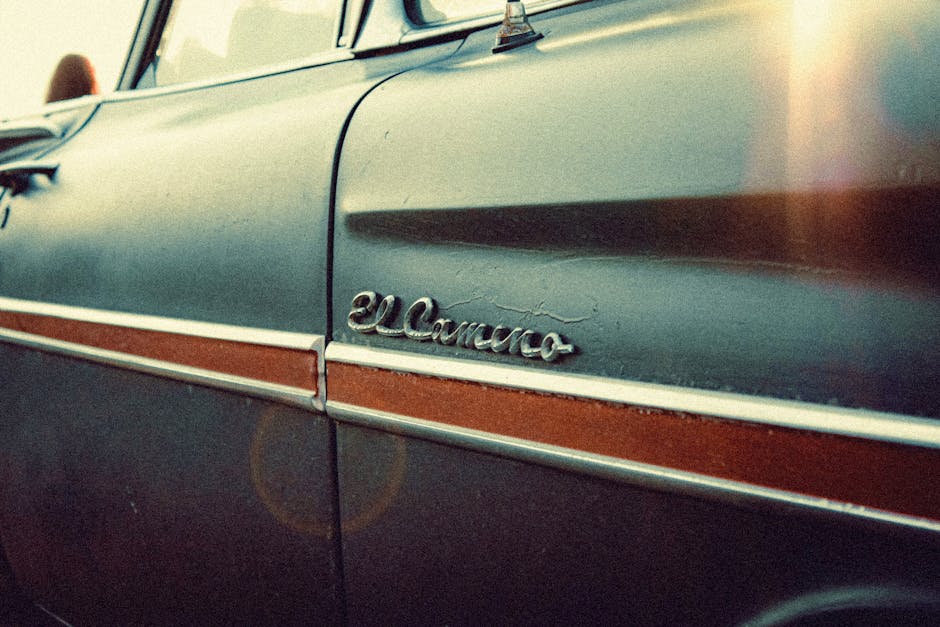
Market Dynamics and Discontinuation
When the curtain rose in 1959, the El Camino seemed poised for glory, positioning itself as Chevrolet's flamboyant response to Ford's well-established Ranchero. But alas, Chevy found itself playing catch-up to Ford's two-year head start. Market forces weren't having any of it—the Ranchero was already making waves like a surfer on high tide, leaving our beloved Chevrolet entry wading in its wake. The early knockback saw the El Camino take a much-needed breather in 1960, giving it time to wind up for its gut-punch comeback.
Motivated by the muscle car mania sweeping the nation in the '60s, Chevrolet decided to up its game. In 1964, the El Camino emerged from its chrysalis onto the burgeoning muscle scene, riding high on the Chevelle platform and flashing shiny V8 badges like medals of honor. These Chevelle-based iterations capitalized on the El Camino's unique dual-promise: hauling prowess and road-burning performance. As baby boomers came of age, eager for speed and style, the El Camino carved out its identity, shimmying between showrooms and revving into the collective imagination of America's youth.
Yet, the road to success seldom runs smooth for long. With the emergence of the Chevy S-10 in 1982, a compact truck that quickly endeared itself to the masses for its manageable size and practical utility, the El Camino found itself parked on the sidelines. It was a sign of the times—a shift toward more fuel-efficient, utilitarian vehicles as the oil crises of the '70s loomed large over consumer choices.
Adding insult to injury, by the mid-1980s, automotive regulations and changing consumer tastes steered the market away from our unique hero. Even Ford, sensing a sea change, began to shelve their pioneering Ranchero. In 1987, the El Camino was on its final lap, the production line finding its twilight hours influenced by declining sales, fickle consumer trends, and perhaps a dash too much overextension of design.
"The end of El Camino's production timeline symbolizes more than the brand's decline… It speaks to the ebbs and flows of market dynamics — a revelation of how consumer appetites, technological advances, and strategic gambles orchestrate the grand ballet of the automobile world."
And as the nostalgia for classic motoring gathers momentum, there's little doubt that the unique spirit of the El Camino will keep on trucking in our hearts and minds. After all, legends never really die; they just rev a little quieter, a little deeper in people's souls.
- Iggulden C. Chevrolet El Camino: A Comprehensive Review. The Drive. 2021.
- Blakeley B. The El Camino Story: From Concept to Icon. Hot Rod Magazine. 2019.
- Smith J. Evolution of the Chevrolet El Camino. Automobile Magazine. 2018.